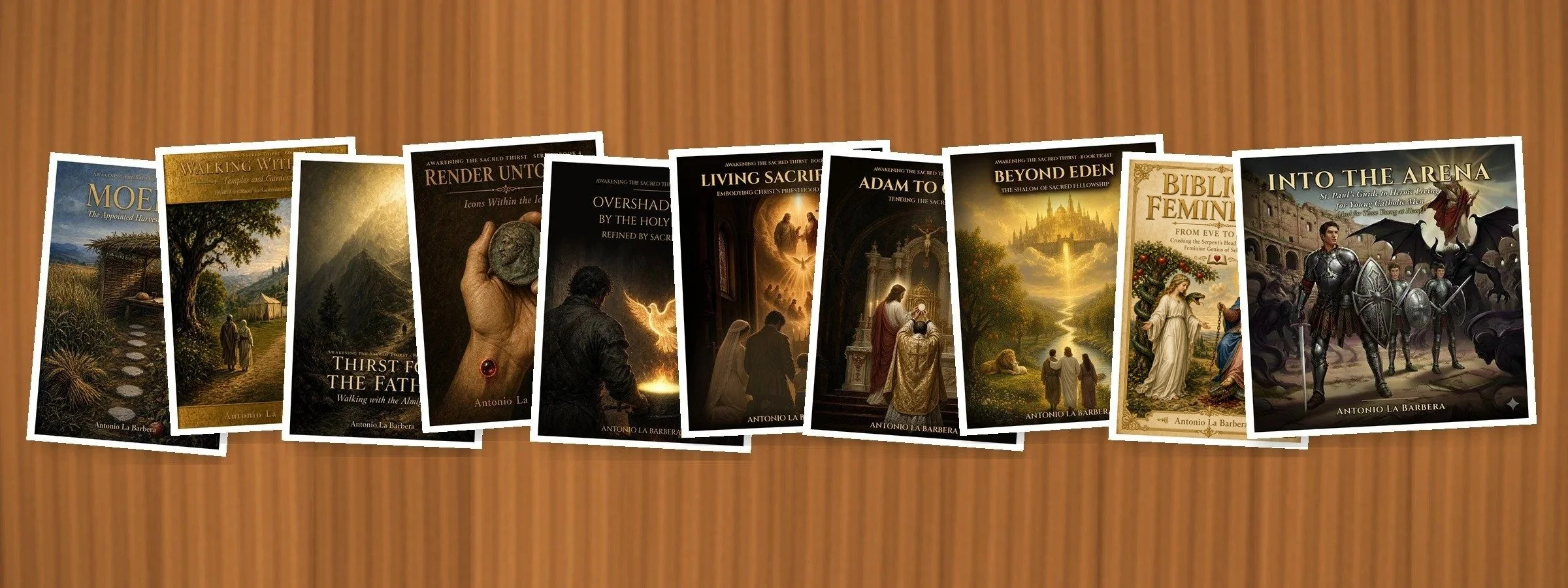
Books
I’m writing an eight-book series called Awakening the Sacred Thirst: The Metamorphosis of Living with Hands Open. I came across the phrase “living with hands open” while I was writing it, as I kept finding the same contrast in Scripture: grasping hands and open ones. The thirst we carry is not a defect to be cured, but a summons to be answered. These books follow that thirst through Scripture and the life of the Church, so that a reader who has wondered how to find God in the Bible may learn to read it, to pray it, and to live it.
The series moves in a clear order: when God meets His people, where He dwells, Whom we thirst for, the Son who shows the Father, life in the Holy Spirit, the priesthood of the baptized, the priesthood of the ordained, and the peace of the world to come. Each book can be read on its own, and together they form one walk. The series is forthcoming.
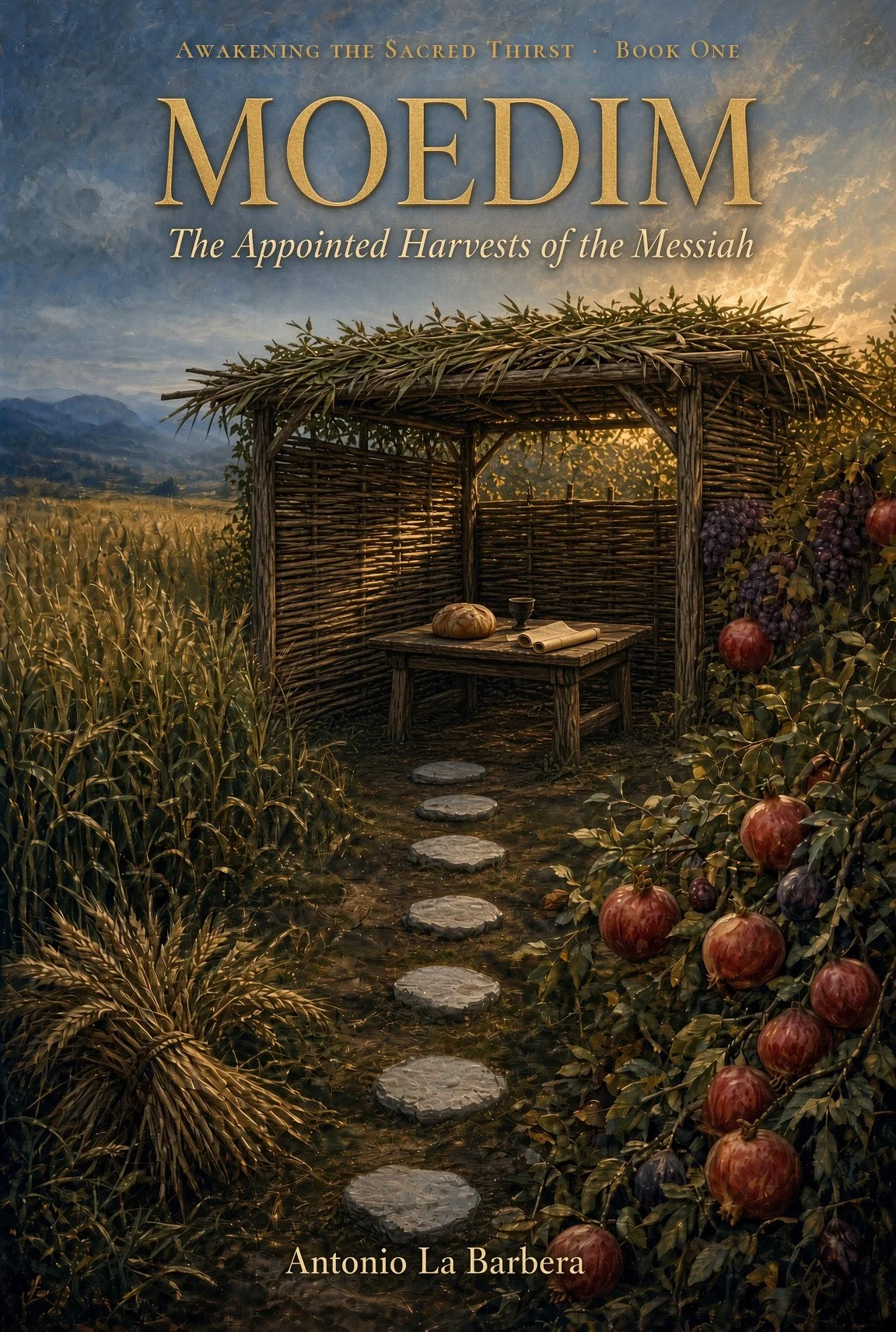
Book 1 · Moedim: The Appointed Harvests of the Messiah
A moed is an appointment. This first book teaches when the Father has already set times to meet His people: the feasts of Leviticus 23, received as gift and not as grind. Each feast is read in three steps — what the day was in Israel, what it became in Christ, and what it still waits for — until the book comes to rest at the Eucharist, where the Church already keeps the days until He comes.
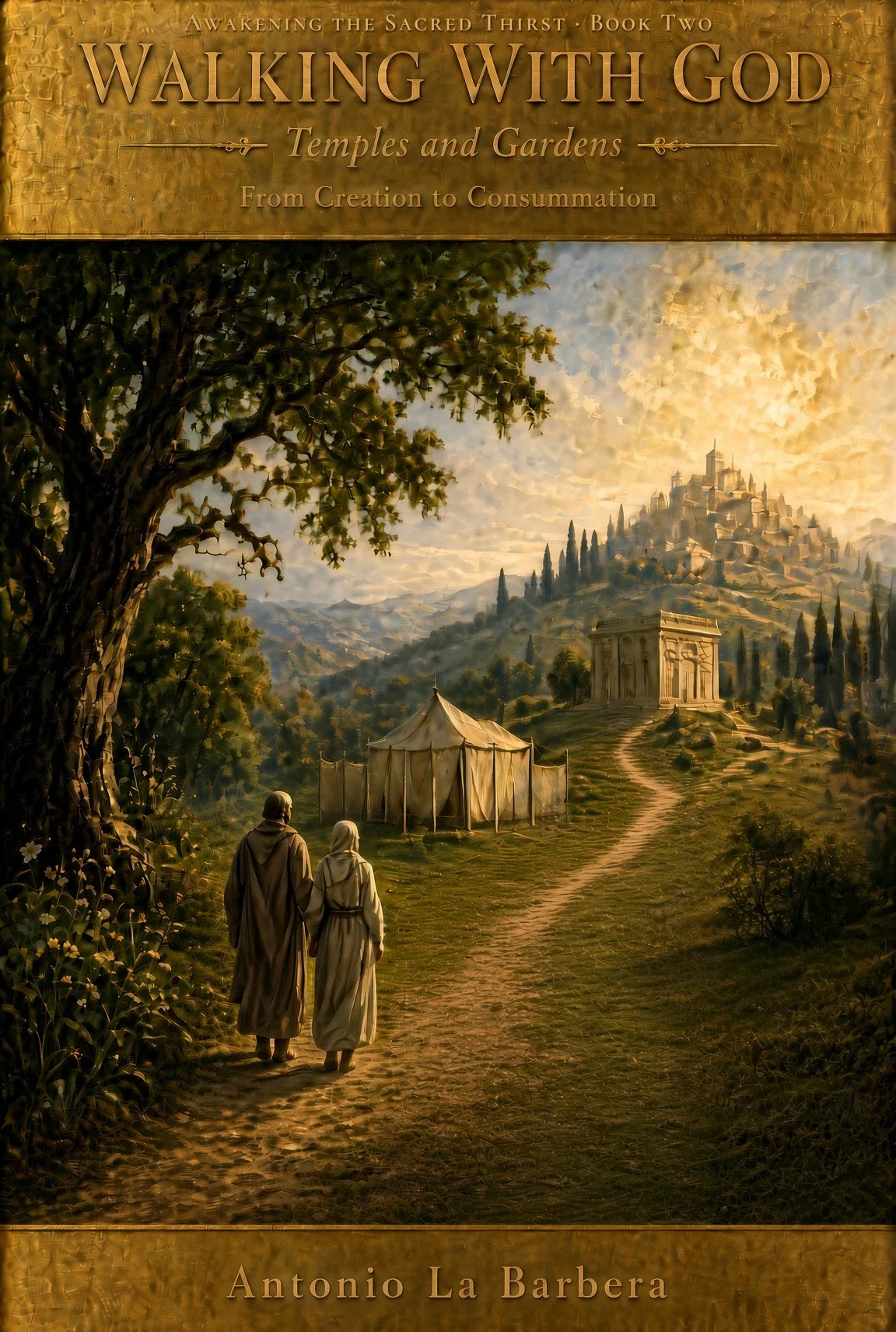
Book 2 · Walking with God: Temples and Gardens: From Creation to Consummation
If Moedim asks when God meets His people, this book asks where the Holy One dwells. It walks from Eden as the Holy of Holies through the tabernacle and the Temple, to Jesus Himself as the Temple, to Gethsemane and the garden of the tomb, and at last to the city that needs no temple. The land is the Lord's, and the house was never finally ours. That is not a loss. It is the condition of the walk.
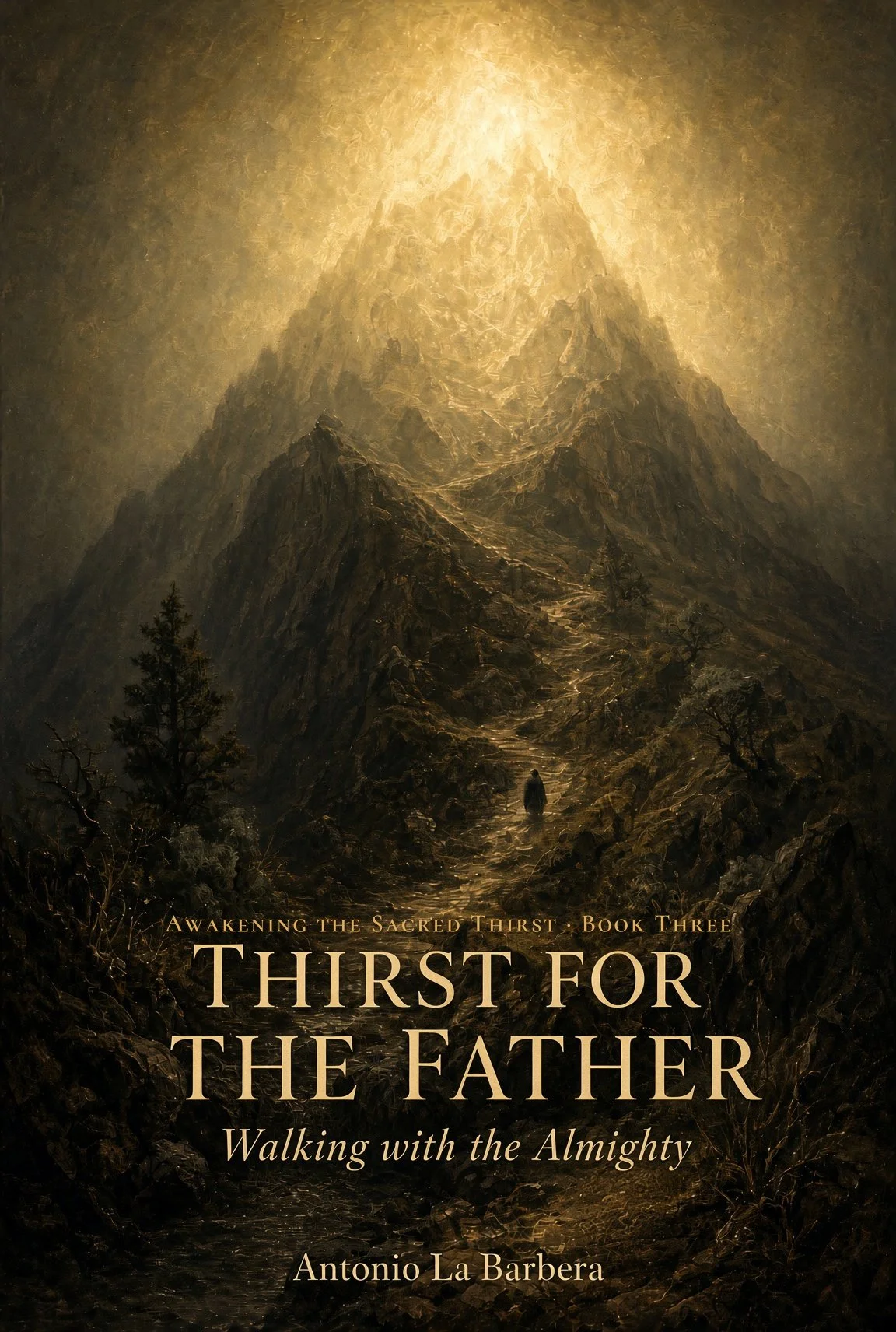
Book 3 · Thirst for the Father: Walking with the Almighty
After when and where comes Whom. The rooms and the days were made for the Father: not for an idea of God, and not for a program of becoming spiritual, but for the Almighty we cannot hold, Who is already nearer to us than we are to ourselves. This book walks with anyone who believes and still wakes thirsty, and it teaches the oldest answer to God's call: “Father, here am I.”
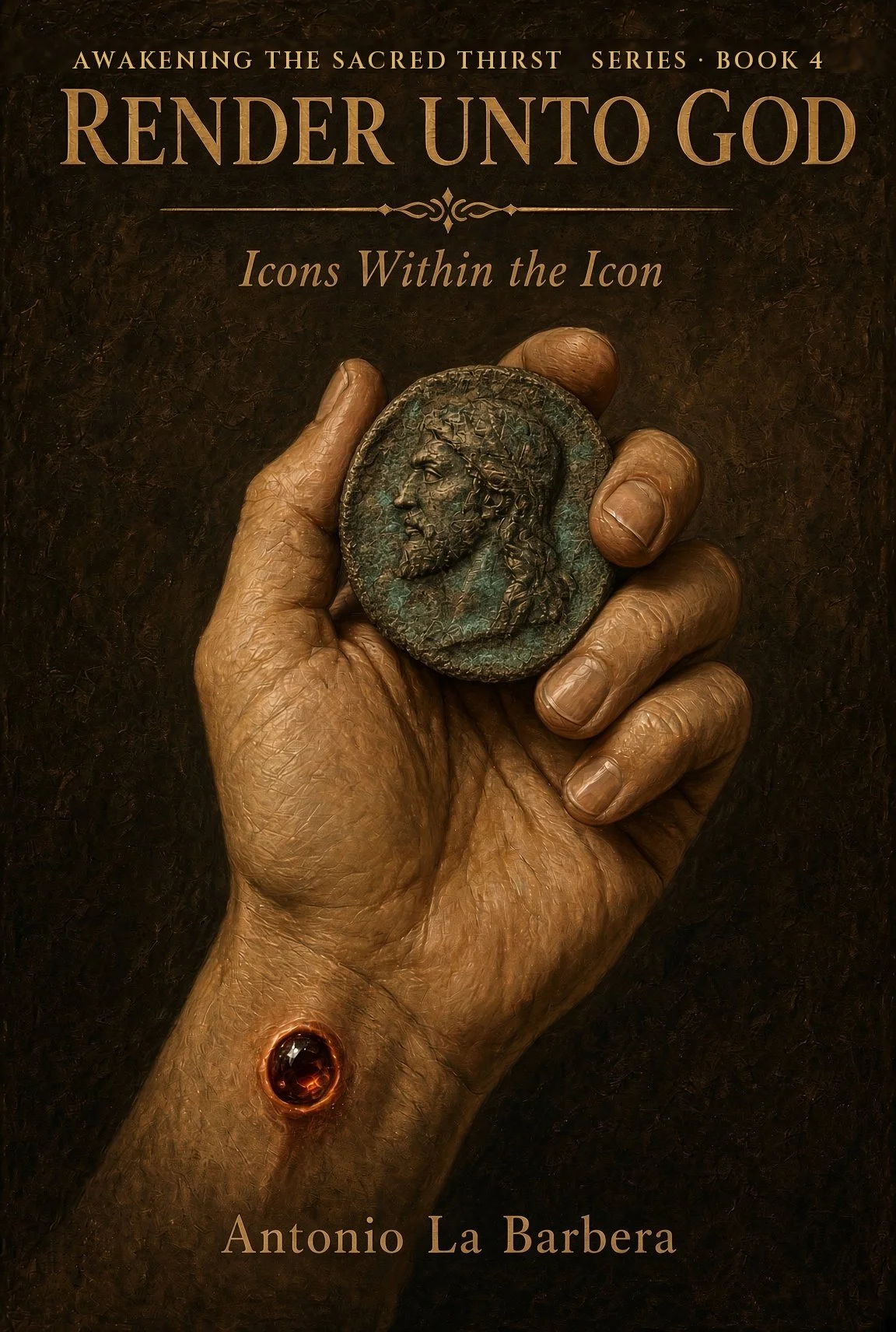
Book 4 · Render Unto God: Icons Within the Icon
Philip said, "Lord, show us the Father, and we shall be satisfied." Jesus answers that whoever has seen Him has seen the Father: the Son is the Face, the true Icon. From Caesar's coin, the book asks whose likeness we bear, and what it means to render back to God the image that is already His — not by frantic effort, but by giving ourselves back to the One who poured Himself out.
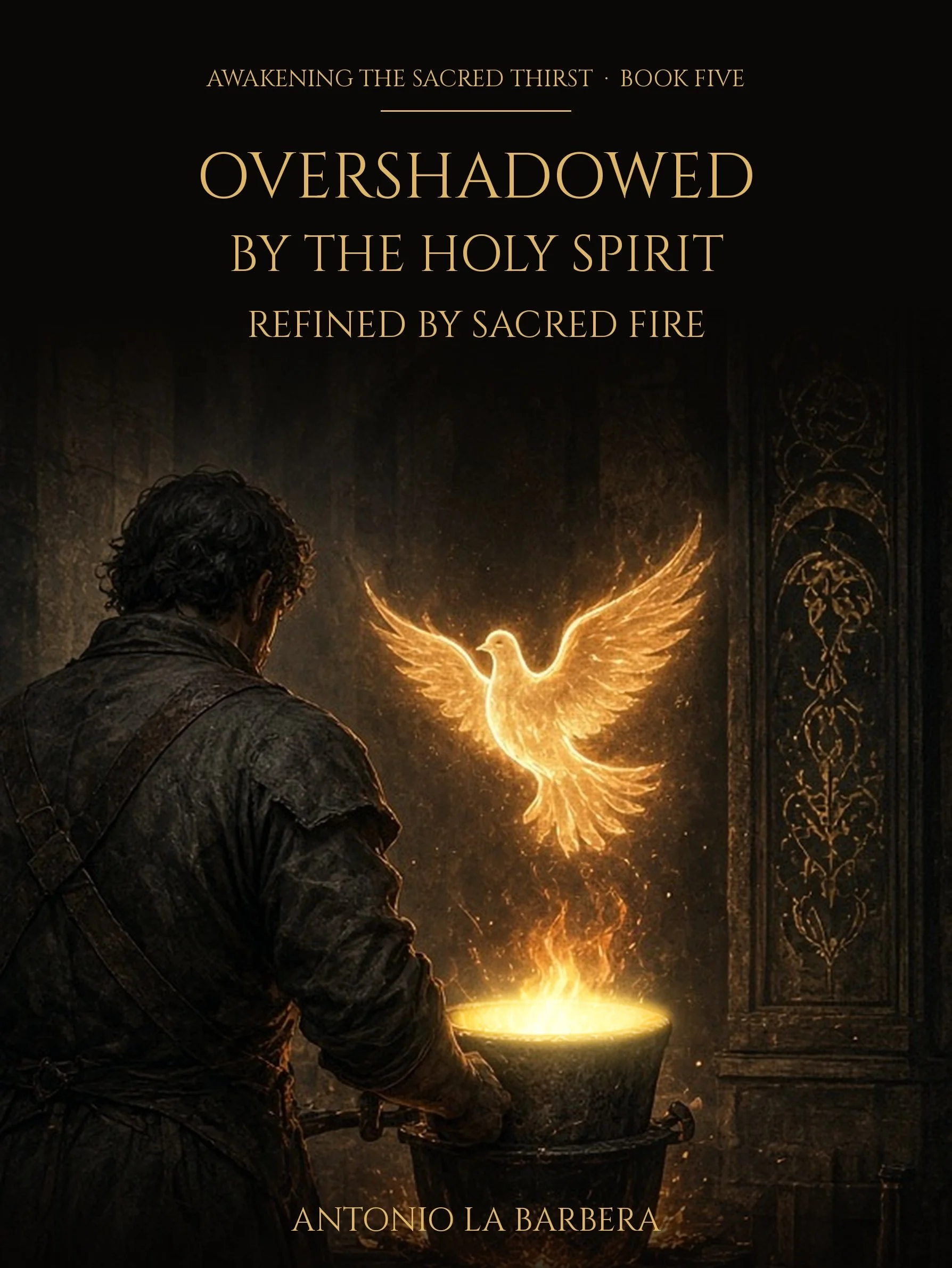
Book 5 · Overshadowed by the Holy Spirit: Refined by Sacred Fire
Following the Son cannot be done by self-improvement alone. This book teaches the Holy Spirit not as a force to manage, but as Someone who overshadows Mary, the Church, and the believer, crying "Abba" in us, refining us by sacred fire, and sending us out. The Refiner does not melt in order to ruin. He sits until He sees His own face looking back from the silver.
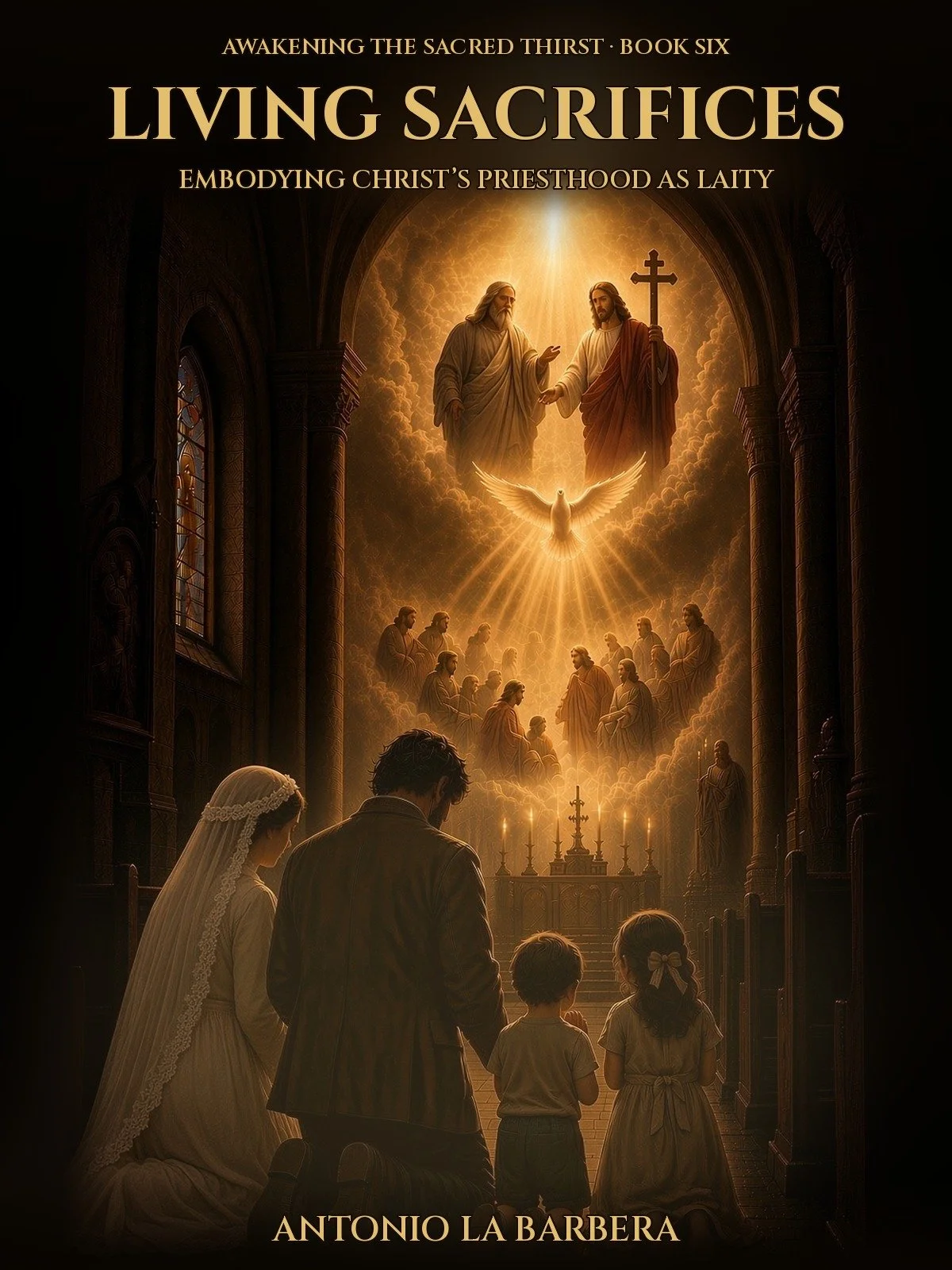
Book 6 · Living Sacrifices: Embodying Christ's Priesthood as Laity
This volume asks what the walk looks like in the ordinary life of a baptized Catholic. Starting from St. Paul's call to present our bodies as a living sacrifice, it turns to the common priesthood of the baptized, lived in a home, at work, and in the parish, and to the laity's share in the offering of the Mass. The laundry, the commute, and the hard conversation can be offered to God.
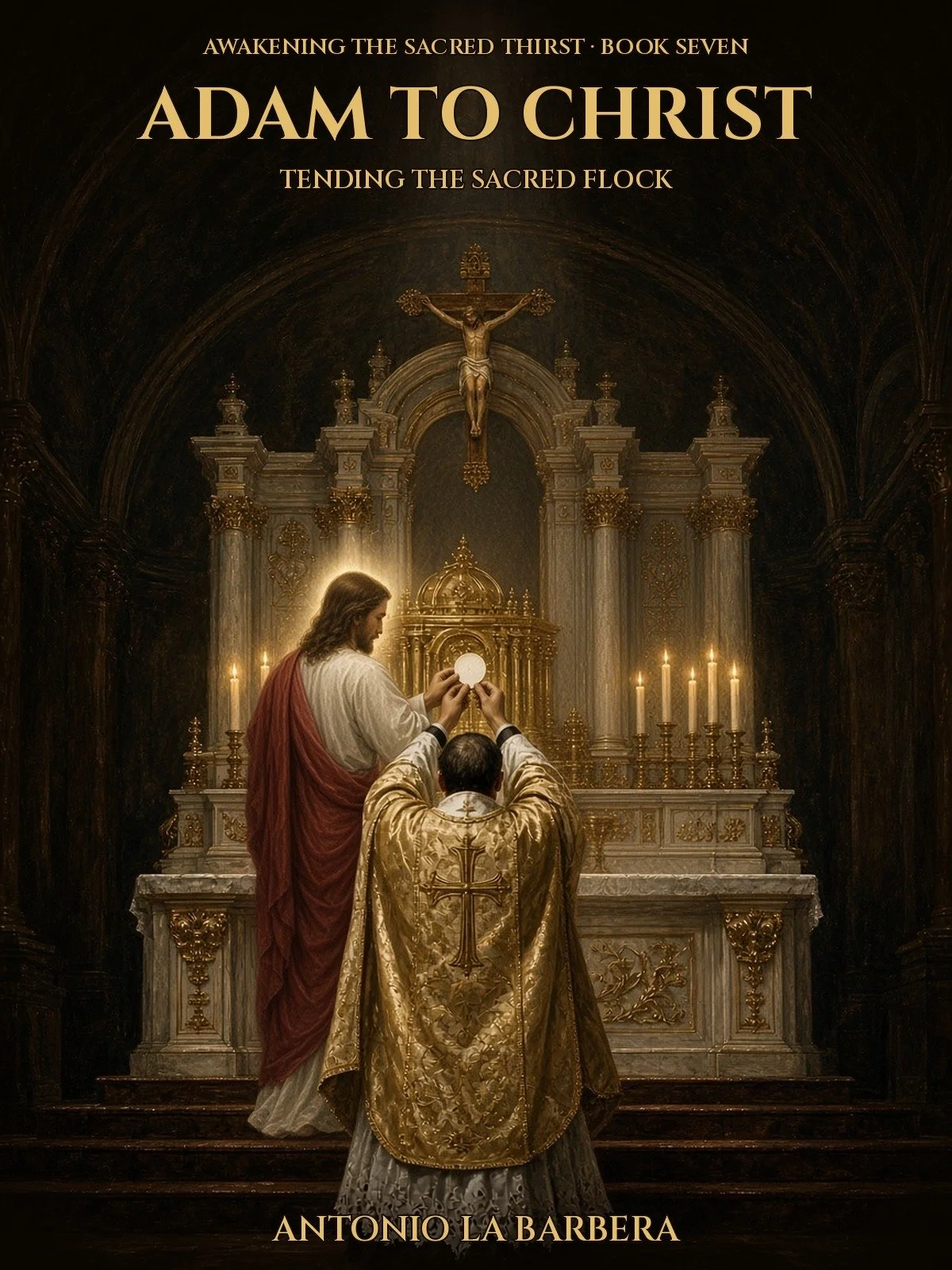
Book 7 · Adam to Christ: Tending the Sacred Flock
Book Six looks at the offering of the laity. Book Seven turns to the ordained shepherds who serve that offering, and traces priesthood through Scripture: from Adam in the garden, through the patriarchs, the priesthood of Israel, and Melchizedek, to Christ the One Priest, and the Catholic priest who serves in Him. At the center stands the Good Shepherd, who lays down His life for the sheep.
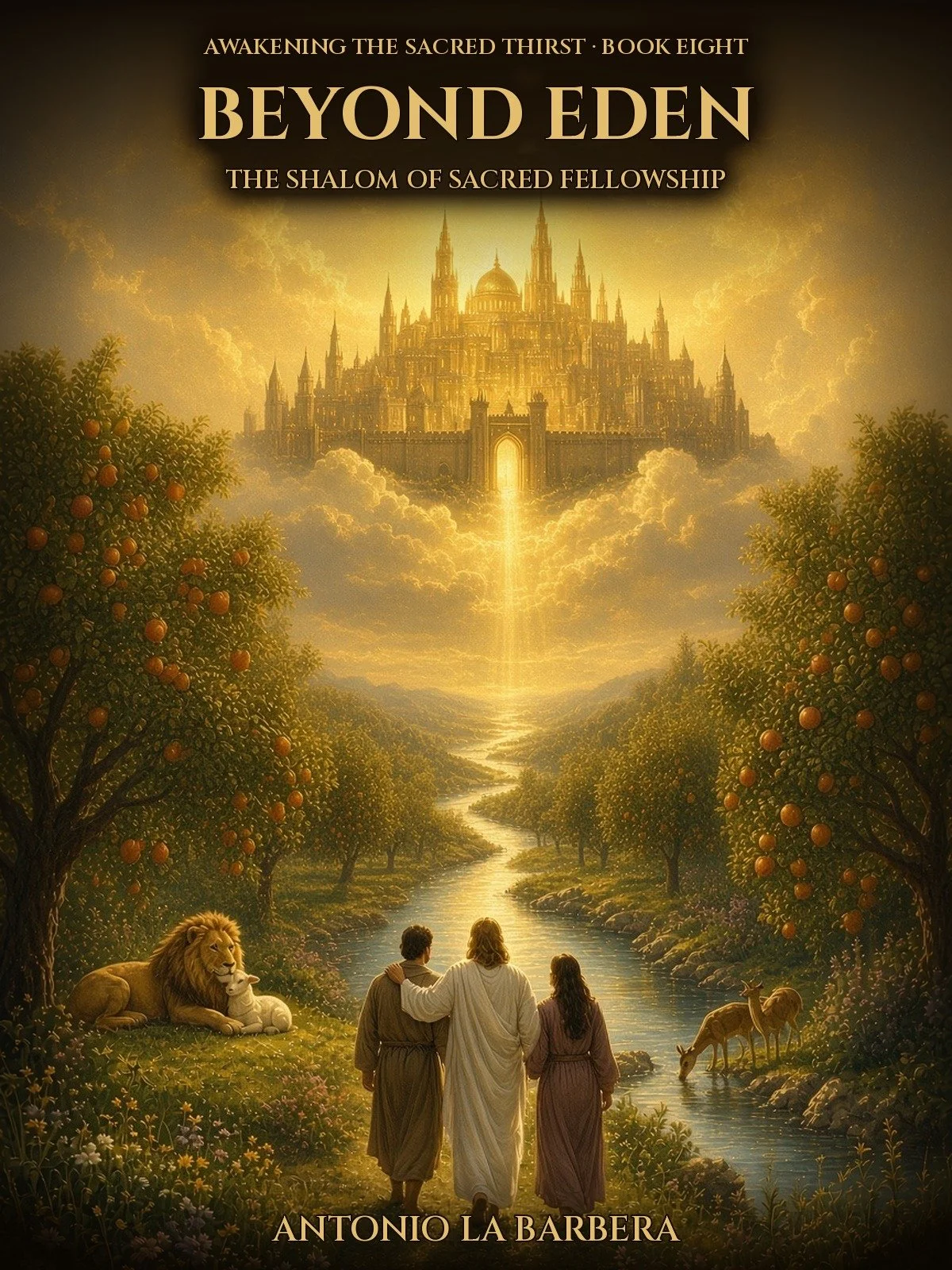
Book 8 · Beyond Eden: The Shalom of Sacred Fellowship
The series began with a calendar and a garden. It ends by looking beyond Eden. Shalom here is more than the absence of conflict: it is complete peace, fellowship with God and with one another, a holiness chosen rather than an innocence merely restored. The appointed times wait for the final harvest, and the Mass and the Book of Revelation become a bridge from present worship to the day when the dwelling of God is with His people.
Other books
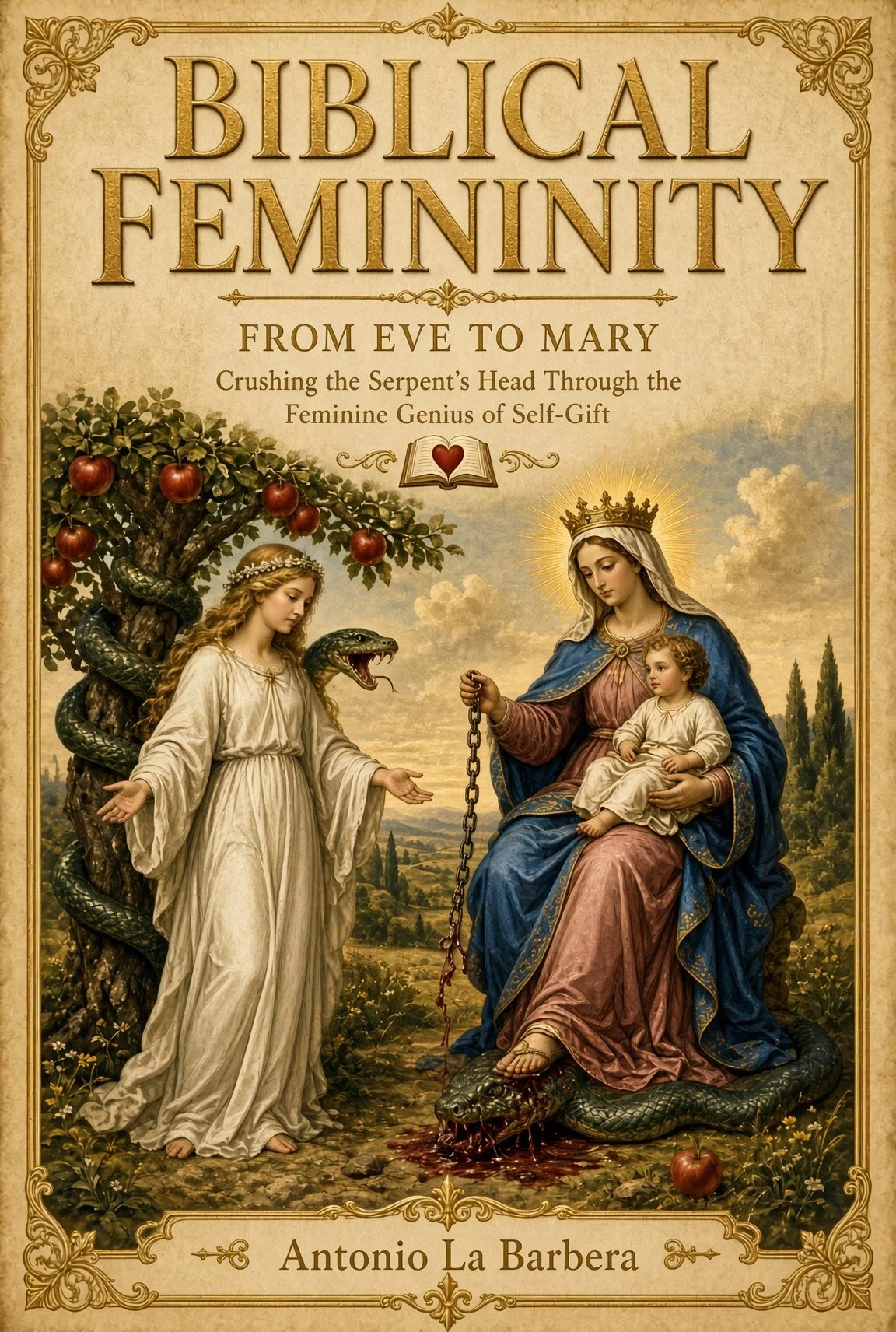
Biblical Femininity: From Eve to Mary: Crushing the Serpent’s Head Through Self-Gift
I invite you to a journey that begins in the Garden of Eden and leads to the hills of Nazareth, a journey from Eve to Mary. I wrote this book for young Catholic women, and through them, for every woman seeking what God wants of her. At the center of biblical femininity is not reluctant submission, but the freeing reality of self-gift: the voluntary offering of oneself in love, the way Mary received God’s favor with open hands. Death entered through one woman’s grasping; Life entered through another woman’s surrender.
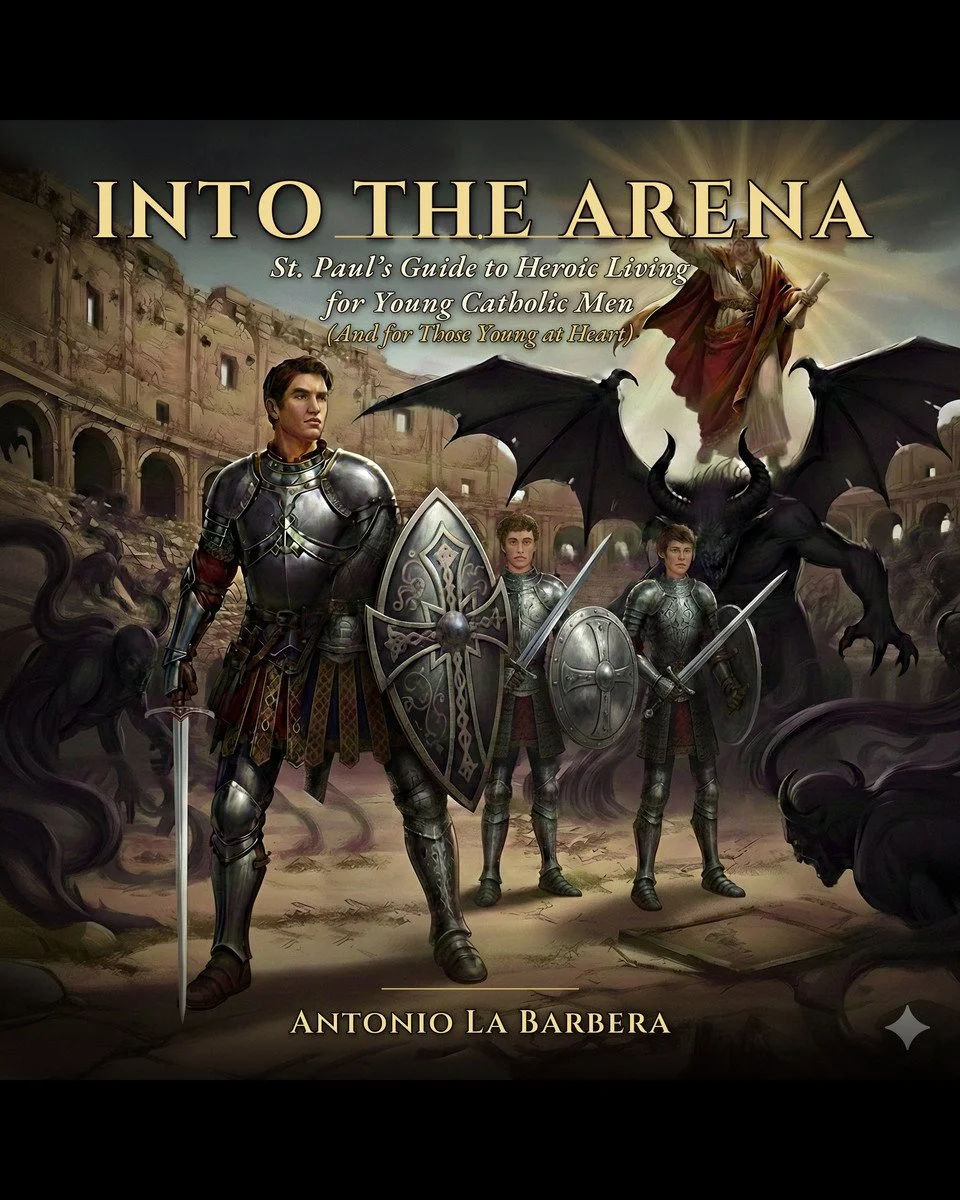
Into the Arena: St. Paul’s Guide to Heroic Living for Young Catholic Men
In a culture that trains young men for distraction, comfort, and self-preservation, this book calls them back to the arena. Drawing from the living words of St. Paul, it challenges them to become what Christ intends: athletes who train with discipline, soldiers who stand firm in spiritual combat, and farmers who sow faithfully for an eternal harvest. The battle is not against flesh and blood; it is a call to stand firm, to protect those entrusted to us, and to run toward the imperishable crown.
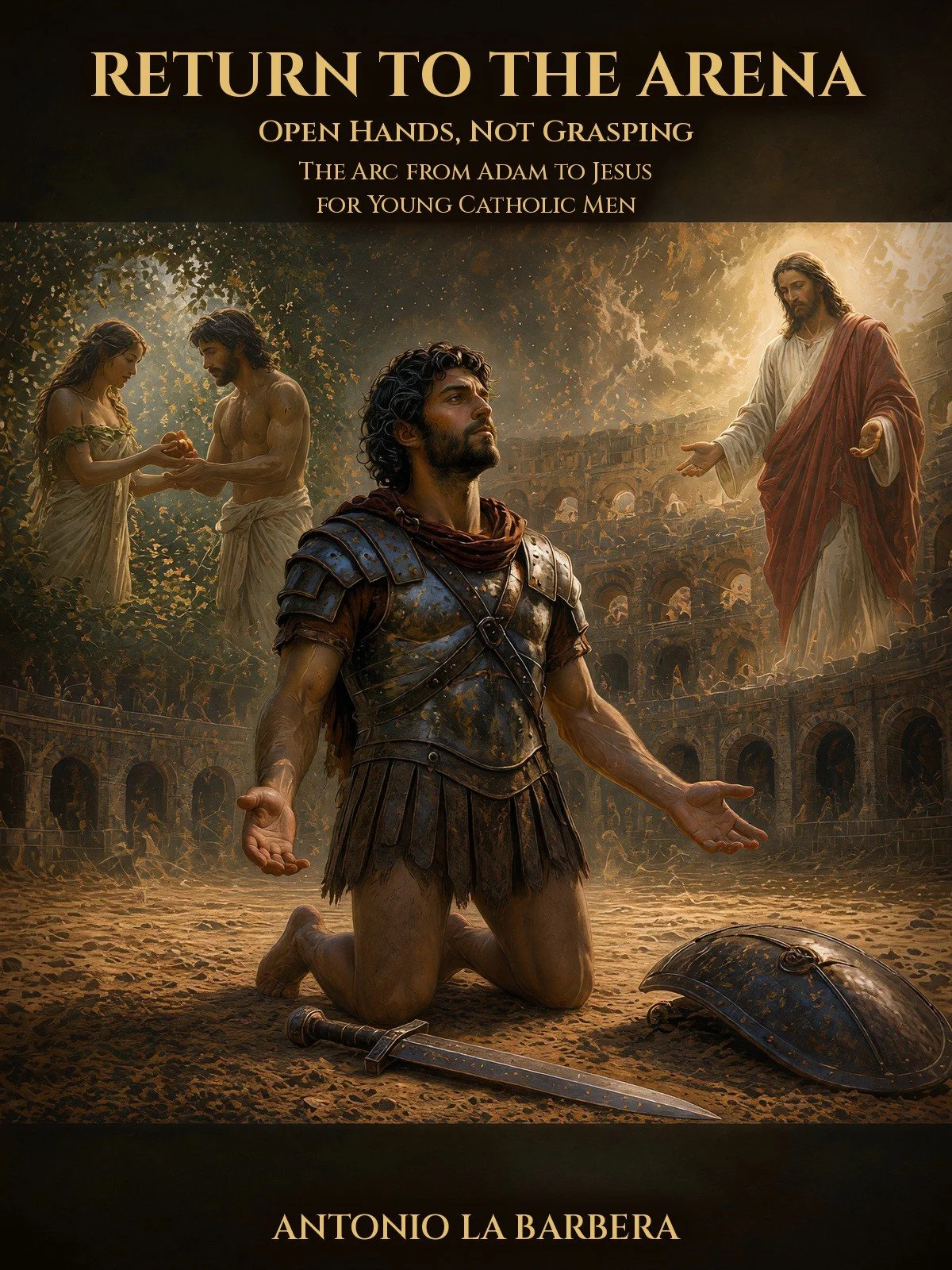
Return to the Arena: Open Hands, Not Grasping: The Arc from Adam to Jesus for Young Catholic Men
This short book is a companion to Into the Arena, written so that it can also be read on its own. It asks a question a man can finish a hard training plan without ever facing: what are your hands for? Our hands are for surrendering to God what He wants us to surrender, and for receiving what He wants to give us. They are for gift. They are not for grasping.
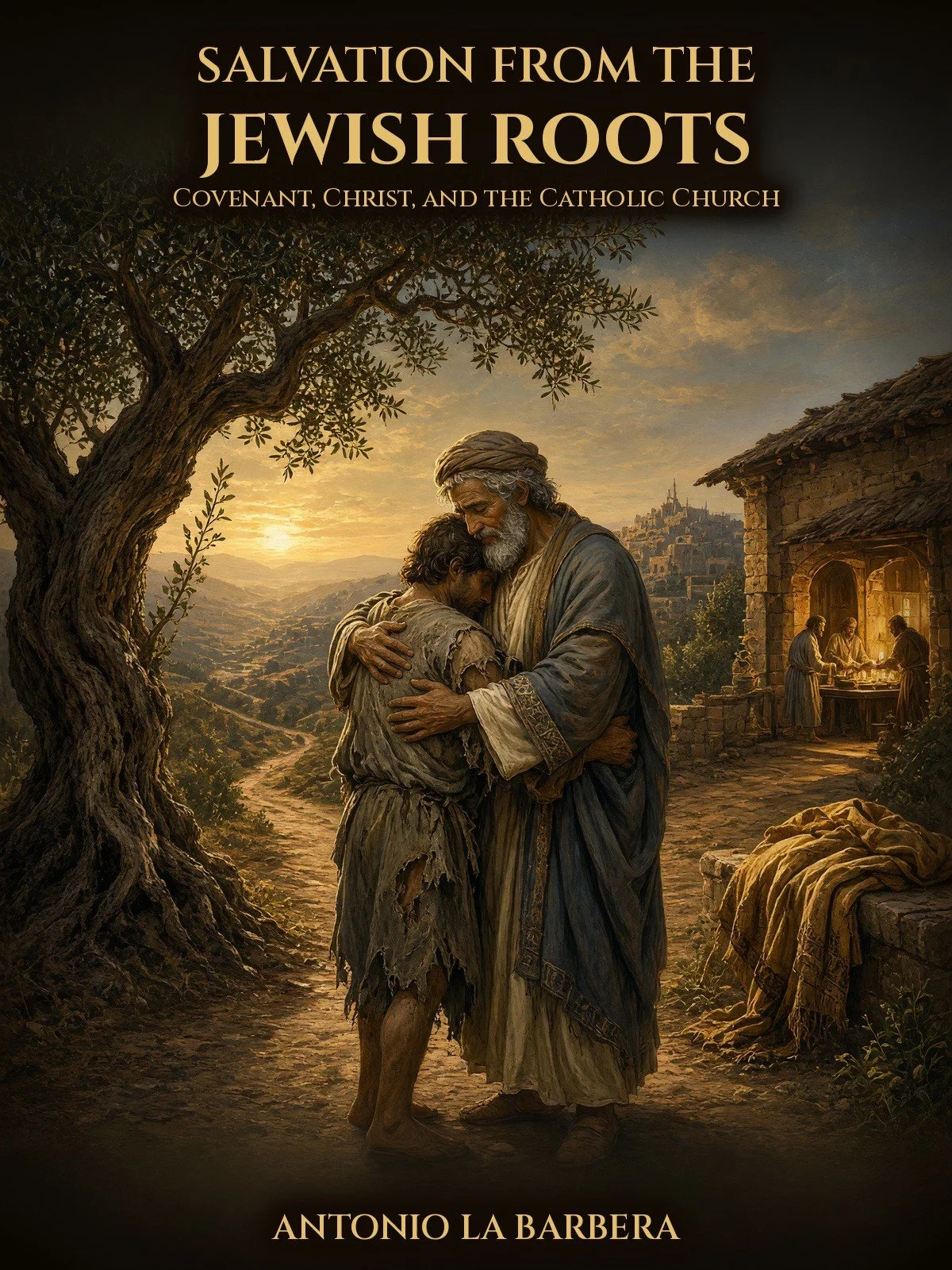
Salvation from the Jewish Roots: Covenant, Christ, and the Catholic Church
I wrote this book as a Catholic book about the Church’s Jewish roots, so that a parish reader can finish it, and so that a Jewish reader can see the argument without being treated as an exhibit. It begins from Jesus’ word, “Salvation is from the Jews,” and follows a simple ridge: Jesus belongs to Israel; the call to Israel is not revoked; the Messiah is not optional; and contempt is forbidden.